

The Strategic Imperative of Web Hosting: A Comprehensive Guide to Provider Selection
In today’s digital-first economy, an organization’s website is no longer a mere online brochure; it is a critical piece of infrastructure. It serves as a primary revenue channel, a vital marketing platform, and the first point of contact for countless stakeholders. The performance, security, and reliability of this digital asset are directly tied to the underlying web hosting environment. Consequently, the selection of a web hosting provider has evolved from a simple IT task into a strategic business decision with far-reaching implications.
Choosing incorrectly can lead to quantifiable losses through downtime, diminished brand reputation from security breaches, and poor user experience resulting from slow page load speeds. Navigating the saturated market of hosting providers, each with its own compelling marketing claims, requires a structured and data-driven approach. This guide outlines a professional framework for vetting and selecting a hosting partner that aligns with your long-term strategic goals.
Foundational Pillars of Web Hosting Excellence
A comprehensive evaluation of a potential hosting provider must extend beyond surface-level pricing. It requires a granular analysis of four core pillars: performance, security, scalability, and support.
1. Performance and Uptime Architecture
High performance is a non-negotiable requirement. It directly impacts user experience, SEO rankings, and conversion rates. Key performance indicators include:
Server Stack: Investigate the underlying technology. Does the provider utilize modern, high-performance web servers like LiteSpeed or NGINX over older Apache configurations?
Hardware Specifications: Look for the use of Solid-State Drives (SSDs), specifically NVMe SSDs, which offer superior read/write speeds compared to traditional hard drives. Ample RAM and dedicated CPU core allocation are also crucial.
Network and Uptime: A provider’s Service Level Agreement (SLA) should guarantee at least 99.9% uptime. Examine their network infrastructure, data center locations, and whether they include a Content Delivery Network (CDN) to ensure low latency for a global audience.
2. The Security Framework
A reactive approach to security is insufficient. A premier hosting provider must offer a proactive, multi-layered security framework to protect your digital assets. This includes:
Proactive Threat Mitigation: Look for features like a Web Application Firewall (WAF), integrated malware scanning and removal, and robust DDoS protection.
Data Integrity: Automated, regular backups with a simple restoration process are essential for business continuity.
Essential Security Layers: A free SSL certificate is now a standard requirement for encryption and trust. Additionally, inquire about server hardening protocols and secure file transfer options (SFTP).
3. Scalability and Future-Proofing
Your hosting solution must be able to accommodate growth without requiring a complex and costly migration. A provider’s product ecosystem should offer a clear and seamless scaling path from shared hosting to Virtual Private Servers (VPS), cloud hosting, and dedicated servers. This ensures that as your traffic and resource demands increase, your infrastructure can scale in lockstep.
4. The Support Infrastructure
Evaluate customer support not as a help desk, but as a technical partnership. Differentiate between providers offering basic support and those providing expert, 24/7/365 assistance via multiple channels (live chat, phone, tickets). For complex needs, consider the availability of managed hosting services where the provider handles server administration, updates, and maintenance.
A Due Diligence Framework: Leveraging Expert and Community Insights
A thorough analysis requires synthesizing both expert technical reviews and broad-based user experiences. This is where specialized research platforms become indispensable tools for the modern decision-maker.
The Analyst’s Perspective with HostingAdvice.com
For in-depth technical analysis and market intelligence, a platform like hostingadvice.com is an invaluable resource. It provides detailed, long-form reviews compiled by industry experts who conduct performance benchmarks, test support responsiveness, and dissect the terms of service. Their educational guides can help stakeholders understand the nuanced differences between hosting types and the specific technologies that underpin them. Using hostingadvice.com allows your team to build a shortlist of providers whose technical specifications align with your project’s architectural requirements.
The Voice of the Customer with HostAdvice.com
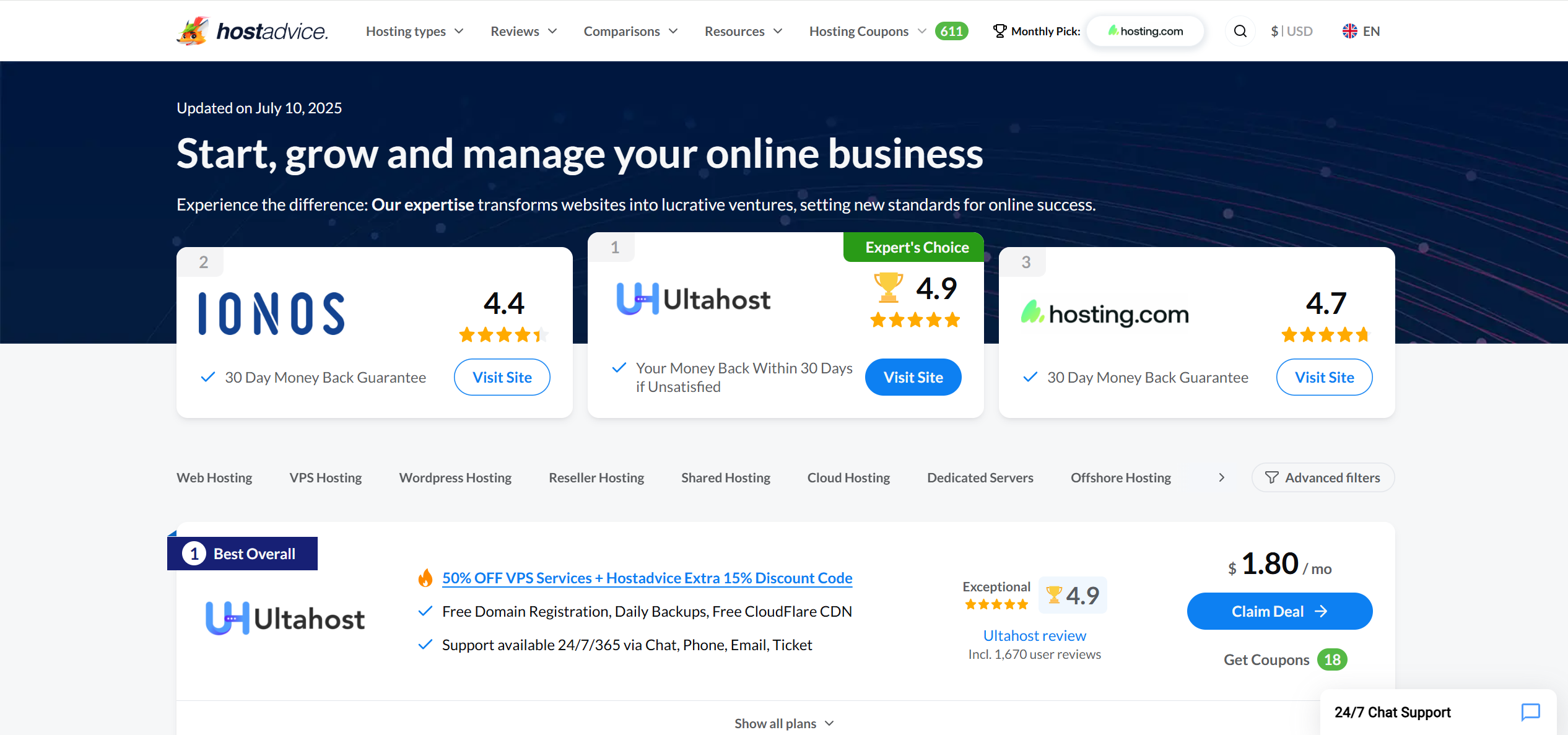
While expert analysis is critical for understanding technical capabilities, it must be validated against real-world performance. This is the strategic value of a platform like hostadvice.com. By aggregating tens of thousands of user-generated reviews, it provides large-scale, quantitative data on customer satisfaction, long-term reliability, and the quality of support over time.
This crowd-sourced intelligence is crucial for identifying systemic issues or confirming the marketing claims of a provider. A thorough review of user feedback on hostadvice.com can reveal patterns in billing practices, renewal pricing, and post-sales support that expert reviews might not capture.
A synergistic research approach—using the deep analysis from hostingadvice.com to build a technically sound shortlist and then cross-referencing it with the extensive user data on hostadvice.com—provides a 360-degree view, minimizing the risk of a poor investment.
Final Vetting and Selection
Armed with this comprehensive data, the final step is direct engagement. Contact the pre-sales support of your top candidates with specific technical questions to gauge their expertise. Carefully review their full Terms of Service and Acceptable Use Policy to identify any potential limitations or hidden costs, particularly concerning renewal rates.
In conclusion, selecting a web hosting provider is a strategic decision that directly impacts your operational success. By moving beyond simple price comparisons and adopting a rigorous evaluation framework grounded in performance, security, scalability, and support, you can secure a reliable foundation for your digital presence.
Leveraging the specialized insights of platforms like hostingadvice.com and the community-driven data of hostadvice.com is an essential part of this modern due diligence process, ensuring you forge a partnership that supports your business objectives both today and in the future.
